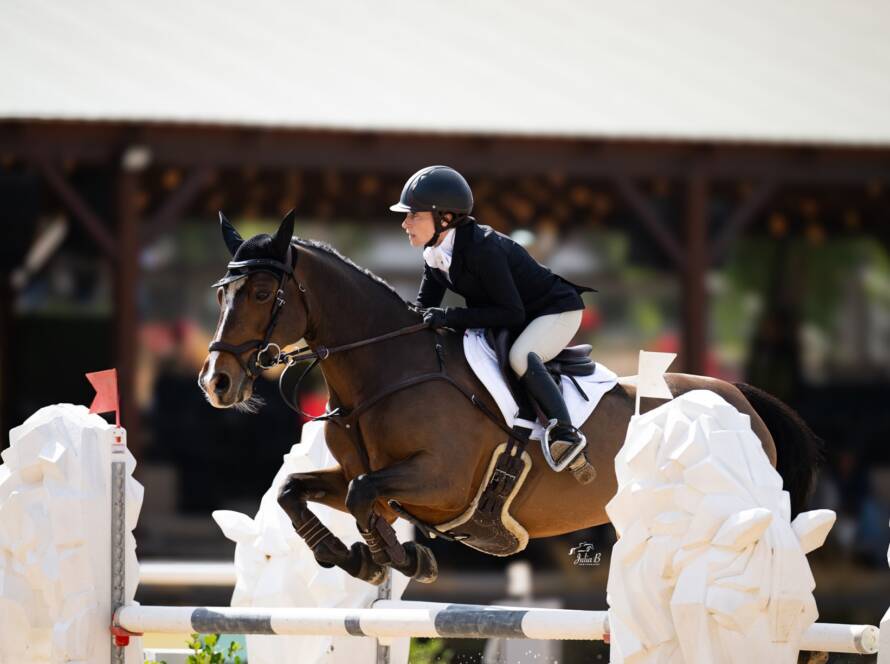
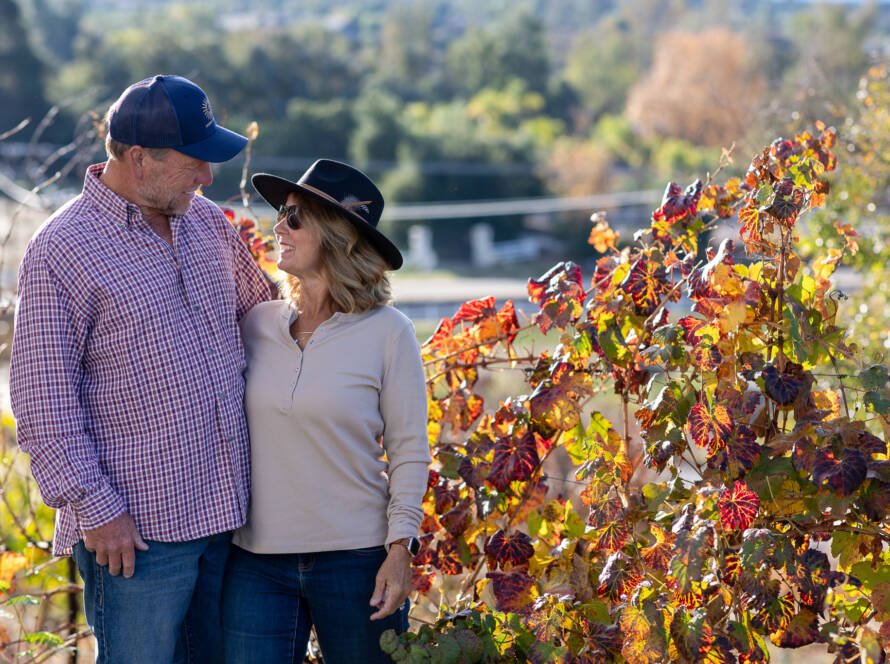
Marcus and Kelly Greene used to capture the action as show photographers on the West Coast eventing circuit. They now watch the action with equally attentive eyes, focused on very different priorities. Marcus brings his experience as a fire marshal to the critical role of safety coordinator for Galway Downs and other events. Kelly runs parking and helps the show office keep things flowing smoothly at United States Eventing Association Area VI events, including Twin Rivers and Woodside.
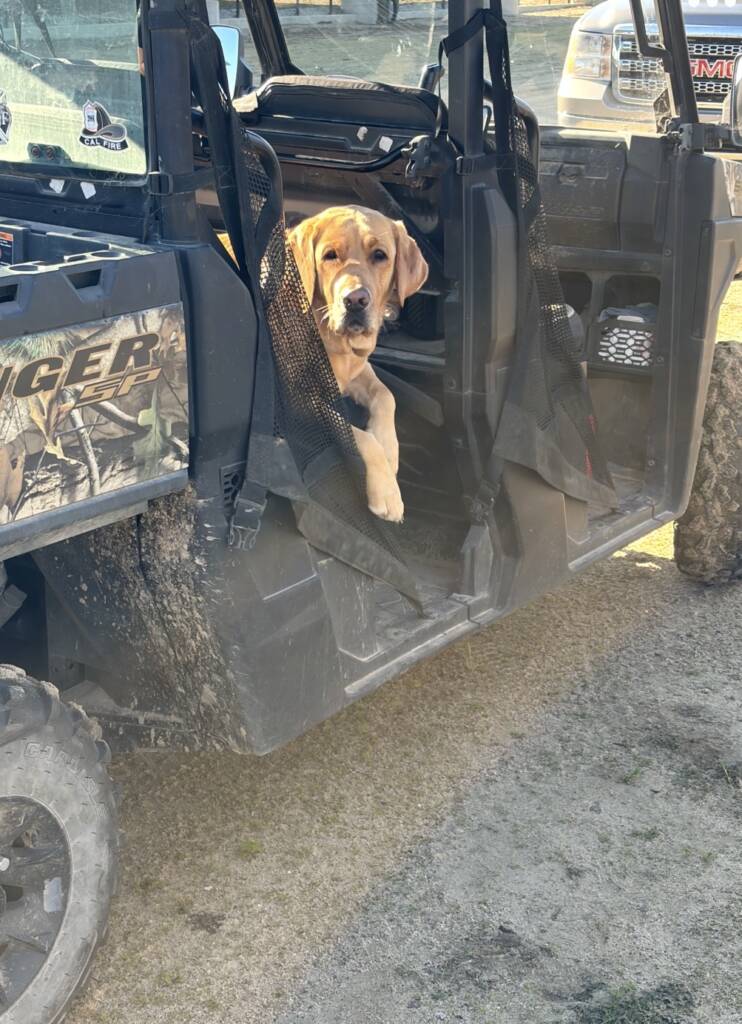
Whatever their role, the Greenes bring wisdom, kindness and encouragement to every event they attend. And then there’s Dixie, the friendly and beautifully behaved yellow Labrador always with, or waiting for, Marcus in his ready-to-roll utility vehicle.
Safety First
Assessing risks and preventing the problems they pose are ingrained habits for Marcus. “As a fire marshal, you think about things that can potentially happen, and you try to mitigate them before anything happens,” he said.
That expertise adds to a lifetime of horse sense. Marcus was raised on a ranch and pursued cowboy sports, including bull riding, throughout his life. It gave him first-hand knowledge of the risks and injuries common in horse sports. The combination is unusual, and his knowledge exceeds the United States Equestrian Federation’s requirements for becoming a safety coordinator.
Equestrian sport – especially eventing — has long prioritized the safety of horse and rider, and Marcus’ generously shared and unique knowledge helps elevate the role of safety coordinator to everybody’s benefit.
USEF and USEA require a designated safety coordinator at all licensed competitions, and Marcus belongs to a nationwide network of safety coordinators who regularly compare notes and experiences. Being proactive instead of reactive is Marcus’ modus operandi. The more he and his contemporaries understand the risks, the better they can put that into practice.
Safety coordinators don’t seek attention. The better Marcus and his team do their job, the more unnoticed they go. But organizers and officials understand and appreciate their role. Technical delegates, the officials responsible for rule compliance, often describe Marcus as their favorite safety coordinator to work with.
A Day on the Job
The safety coordinator’s work starts before the competition. “We come to a show, I look at the area, I look at the weather, and I write the SOPs (standard operating procedures) for the show,” Marcus said. Every likely scenario has a response plan, and every person involved knows their part. That includes the jump crew, the veterinarian, the EMTs and medics, and the driver of the horse ambulance.
On show days, Marcus makes a mobile office of his utility vehicle. He typically has two or three radios going at once. One carries the fence judges out on course, another carries the stadium jumping ring, and emergency medical technicians are at the ready on another.
On cross-country day, that planning turns into listening. If a horse or rider goes down on course, the fence judge at that jump radios in the rider’s condition. If that report doesn’t come quickly, Marcus doesn’t wait. “I’m sending everybody out there, because I have no idea what’s going on,” he said. Listening to the stadium ring at the same time means he can respond to a fall there just as fast. “Rather than have somebody call me, I already know what’s happening.”
“While my radio harness is on, you’re constantly scanning,” he said. “At the end of the day, I can relax and turn it off as soon as I take my radio harness off.”
The Hot Seat
Heat is a major safety concern and crops up often as a cause in incident reports. Riders warm up too long in full protective gear, become dehydrated, and start making small mental mistakes they can’t explain afterward. “You added a stride, you took away a stride, and you don’t know what happened,” Marcus said.
His preventive suggestions are practical. At Fresno County Horse Park and Twin Rivers, hydration stations now sit in front of the cross-country warm-up. Ring stewards remind riders to drink water and watch for anyone who seems off. “If you see something, say something,” Marcus tells them.
Marcus also encourages riders at the lower and mid-levels to shorten their warm-ups on hot days rather than spend 45 minutes in the arena before they start.
Electric bikes are a newer concern. Often ridden by kids without helmets, an e-bike flying past can spook a horse and unseat its rider. Marcus points out that young people under 16 aren’t allowed to drive golf carts at competitions, yet e-bikes, which can move faster, have no such rules.
Behind the Camera
Until recently, the Greenes were known for photography under the MGO Photography banner. It started with sticker shock over the prices of show photos for their daughter, Taylor, a hunter/jumper competitor. It inspired Marcus to buy a camera and learn how to use it, and Kelly to learn photo editing.
At the time, most Area VI events didn’t have an official show photographer, and the Greenes jumped in. They started at Shepherd Ranch and some local hunter/jumper shows, then added Paso Robles Horse Park, Twin Rivers and Fresno County Horse Park, and, later, Galway Downs and The Horse Park at Woodside. Kelly thinks their affordable rates and the fact that they were a family business helped open doors.
All of this happened on weekends. Weekdays were filled with Marcus’ fire marshal career and Kelly’s career as a probation officer, not to mention running their home ranch. “This was an added stress, but we loved the community so much,” Kelly said. Their last show as photographers was at Shepherd Ranch last year. Taylor had stopped competing by then, and the young shooters who had made up their crew had moved on to other things.
Back at the Ranch
Kelly and Marcus met as students at Cal Poly San Luis Obispo. She grew up in Southern California and competed as an eventer; he came from Central California and from the Western side of the horse world. Their home is a seven-acre ranch with 10 horses in Nipomo, on the Central Coast.
A resident trainer handles instruction for the mostly dressage and eventing boarders, while the Greenes do the feeding, cleaning and arena watering. At one point they had close to 30 horses, held shows and clinics, and had paid help. But the traffic and activity lost their appeal, and they’re now happy with fewer boarders and DIY-ing most of the labor.
Scaling down the boarding program and shuttering the shutterbug business didn’t mean slowing down, however. Marcus and their son, Jacob, recently started JMG Enterprise. The small construction company builds ranches and arenas and handles everything from welding to septic systems. Jacob has been an eager and happy ranch hand since early on. “The moment he could reach the pedals was when he was running equipment,” Marcus said.
Kelly continues to be a horse show regular. At Twin Rivers and Woodside, she runs parking and helps with setup, teardown and the office. She loves watching the sport grow. “It’s exhilarating to watch,” she said. “I love watching everybody’s successes.” She’s a regular at Galway Downs, too, but will be sitting out this year’s Eventing Championships to supervise things at home.
And Then There’s Dixie
About three years ago, just as Marcus was starting as a safety coordinator, he lost his yellow Lab. A woman who worked in the show office at Fresno heard about it, knew of a dog who needed a home, and put the two together. That dog was Dixie, and she hasn’t left his side since.
The matchmaking gesture exemplifies what the Greenes love about the eventing circuit: good people, good friends and a community that looks out for one another. In their official and unofficial roles, Kelly and Marcus perpetuate that good vibe. We’re lucky to have them as part of the Galway Downs community.